Vibe-coding and spec-driven development are currently the two dominant philosophies in AI-assisted programming—and they couldn’t be more different. Here, you’ll learn what lies behind both approaches, which tools are available, and when to choose each approach.
AI Development
Technical deep-dives into AI development: model architectures, training approaches, API integrations, and developer tools. Stay current with the rapidly evolving AI development landscape.
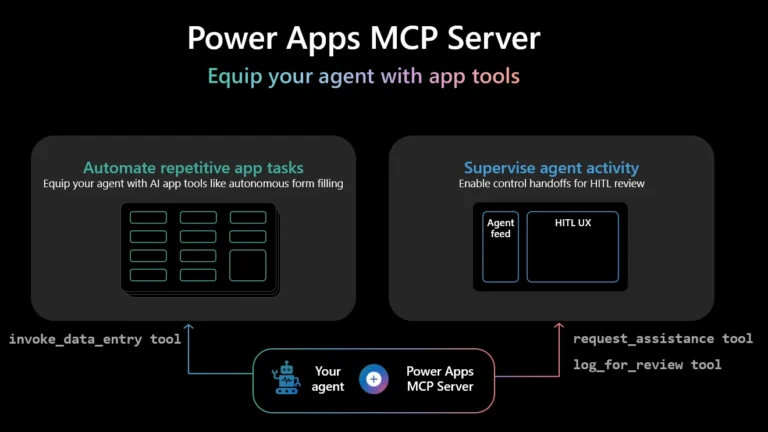
Microsoft brings AI agents to Power Apps: New MCP integration unveiled
Microsoft is expanding its Power Apps with AI capabilities: The new Model Context Protocol (MCP) integration enables developers to embed intelligent agents directly into business applications. This should enable companies to make their workflows significantly more efficient.
GPT-5.3 Codex: The autonomous coding agent is here
- Speed is the core feature: Built on NVIDIA GB200 NVL72 (Blackwell) clusters, GPT-5.3 Codex generates a complete React component in 4.2 seconds and scores 77.3% on Terminal Bench 2.0 — 13.3 points ahead of its predecessor.
- Lives in the terminal, not the chat window: The model is trained to execute CLI commands, run tests, fix lint errors, and manipulate files directly on the local codebase — not just generate passive code snippets.
- The –steerable flag is a game changer: Real-time intervention lets developers pause the output stream mid-generation, inject corrections, and redirect the agent without waiting for a completed (potentially wrong) result.
- Know its limits: GPT-5.3 Codex suffers from context drift on long-horizon tasks with unstructured documents, skips clarifying questions (risking fast hallucinations), and over-refuses legitimate security and refactoring tasks due to conservative filters.
📖 This article is part of our comprehensive ChatGPT guide. Read the full guide →
OpenAI releases GPT-5.3 Codex and makes a radical pivot from pure reasoning depth to extreme inference speed and direct terminal integration. The model dominates with 77.3 percent accuracy in CLI tasks and positions itself as an “interactive teammate” that deliberately prioritizes latency and control over the absolute autonomy of its competitors. We classify the specs and the decisive comparison with Claude Opus 4.6. Read our in-depth review of Claude Opus 4.6 — the depth-focused rival.
Crawlee: Powerful web scraping in 2 minutes
Crawlee combines high-speed HTTP scraping and modern browser automation in a single, scalable Node.js library to extract complex web data more efficiently. Intelligent fallback mechanisms that only activate browsers when necessary can save up to 90 percent of system resources compared to pure Playwright setups. We take a look at the architecture, performance benchmarks, and real-world challenges in continuous operation.
Xcode 26.3: Agentic Coding with Claude & Codex
With the release candidate of Xcode 26.3,Apple is opening up the IDE architecture for autonomous AI agents via Model Context Protocol (MCP) for the first time. With direct access to build servers and error consoles, models can not only suggest code, but also independently fix compilation errors in a “closed loop” and visually validate them. We analyze the technical specs surrounding macOS Tahoe and why developers are warning of potential security risks.
OpenAI releases native Codex app for macOS
OpenAI has released a standalone Codex app for macOS that deeply integrates coding agents based on GPT-5.2 into the operating system. The tool relies on isolated Git work trees to solve complex tasks in parallel in the background without blocking the developer’s active workflow in the main editor. We analyze how this asynchronous “manager” approach compares directly to Anthropic’s CLI competition.
Cowork Plugins: Build your own Claude
Anthropic is rolling out a new plugin infrastructure for Claude Cowork that integrates AI agents deeply into local file systems and workflows for the first time. Unlike OpenAI’s web-based approach, the system is based on local “config-as-code” via JSON and Markdown, enabling complex automations in isolated sandboxes. We analyze the technical specifications of the Model Context Protocol (MCP) and the critical security debate surrounding potential “prompt injections” on your own computer.
Universal Commerce Protocol (UCP): New standard for agentic commerce from Google
Google and Shopify present the Universal Commerce Protocol (UCP), an open framework for agentic commerce. From now on, AI agents such as Gemini and Microsoft Copilot will seamlessly connect shops, payment services, and loyalty programs to enable purchases directly from AI-supported interfaces.