
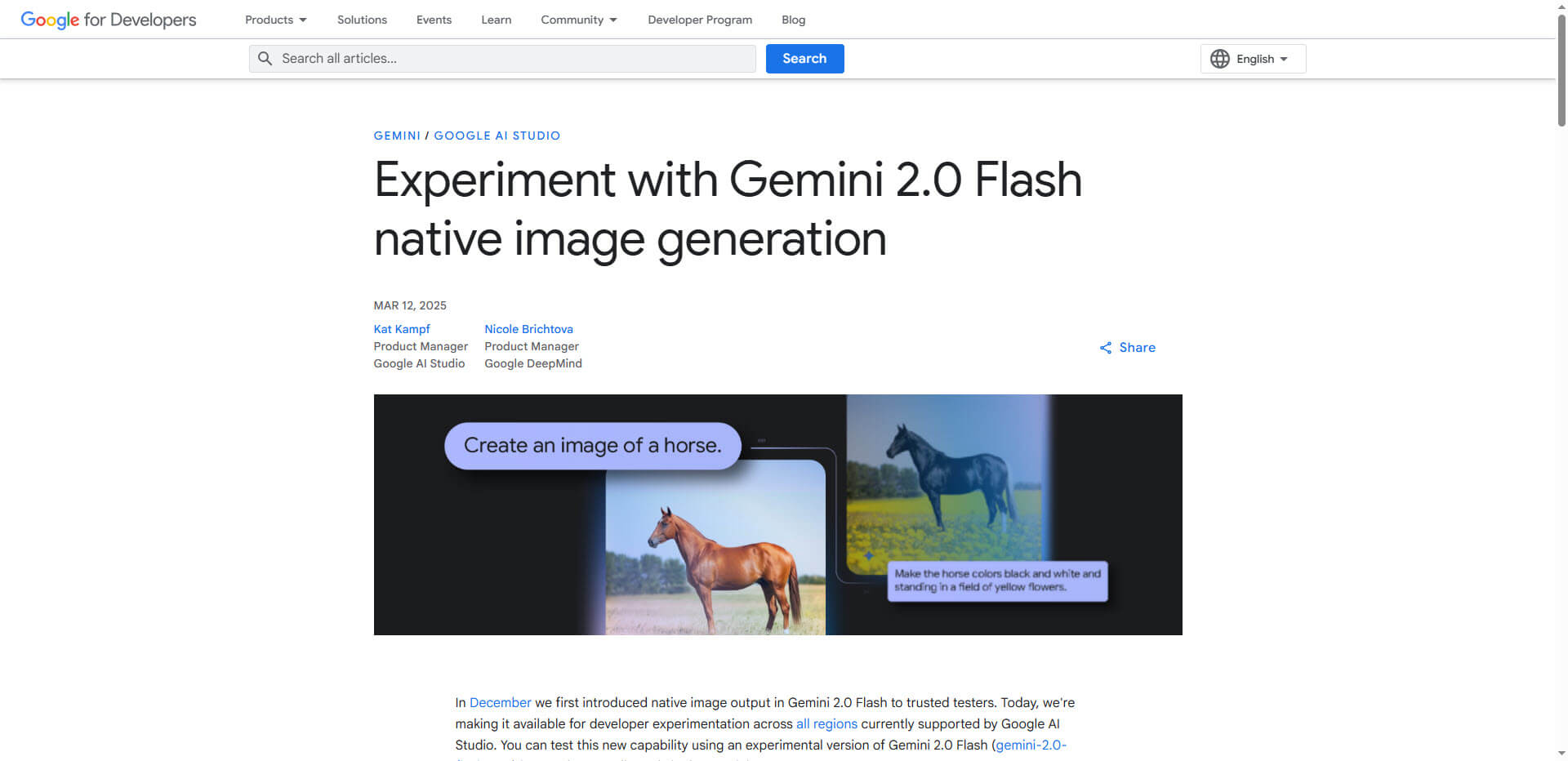
The availability of Gemini 2.0 Flash for image generation marks a new step in Google’s ambitious AI strategy. Previously only available to limited testers, the feature has now been rolled out globally via an experimental version in Google AI Studio and the Gemini API. With unique features such as storytelling capabilities, the option for conversational image editing and improved text rendering quality, Google is setting new standards in interactive image generation.
AI News

Artificial Intelligence (AI) has become an indispensable part of many aspects of professional and everyday life. It enables tasks to be completed more efficiently, precisely, and quickly. From text creation, data analysis, research, business processes, document search, and coding to the creative design of images and videos.
AI Agents
Smart AI systems, that can perform actions and assist users
AI Chatbots
All about up-to-date AI chatbots like ChatGPT, Gemini, Claude, and many more
Image Creation
Create stunning images using Midjourney and other tools
Video Creation
Create whole videos in seconds for marketing or personal use
AI Business
How is the AI market evolving? What are the big players up to?
AI Analytics
Analyze and visualize data from your business or personal finances
Programming with AI
Get a high-paying job by learning AI development skills
Automation
Make everything faster and reduce repetitive work with smart automation
Learn AI
Learn how to use AI, create prompts, and understand why this is a game-changer
Google Gemma 3: Multimodal language models with extended context
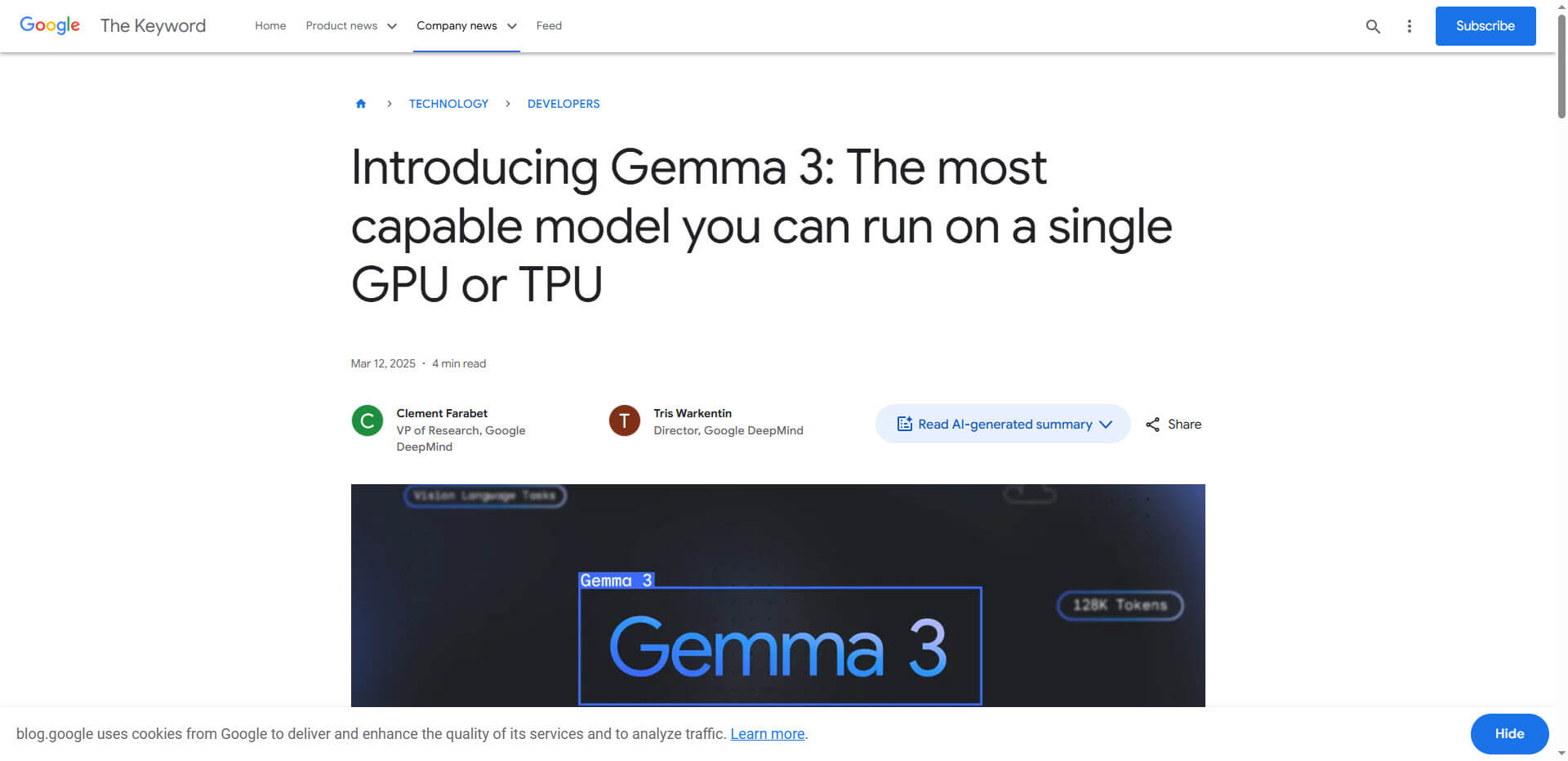
Google has announced the release of Gemma 3, the latest version of its Open Model family – introducing far-reaching innovations for the AI industry. With an impressive combination of multimodality, a huge context window and enhanced language support, this development marks a significant step in the evolution of Large Language Models (LLMs).
Cartesia Sonic: Fast, realistic and flexible text-to-speech technology
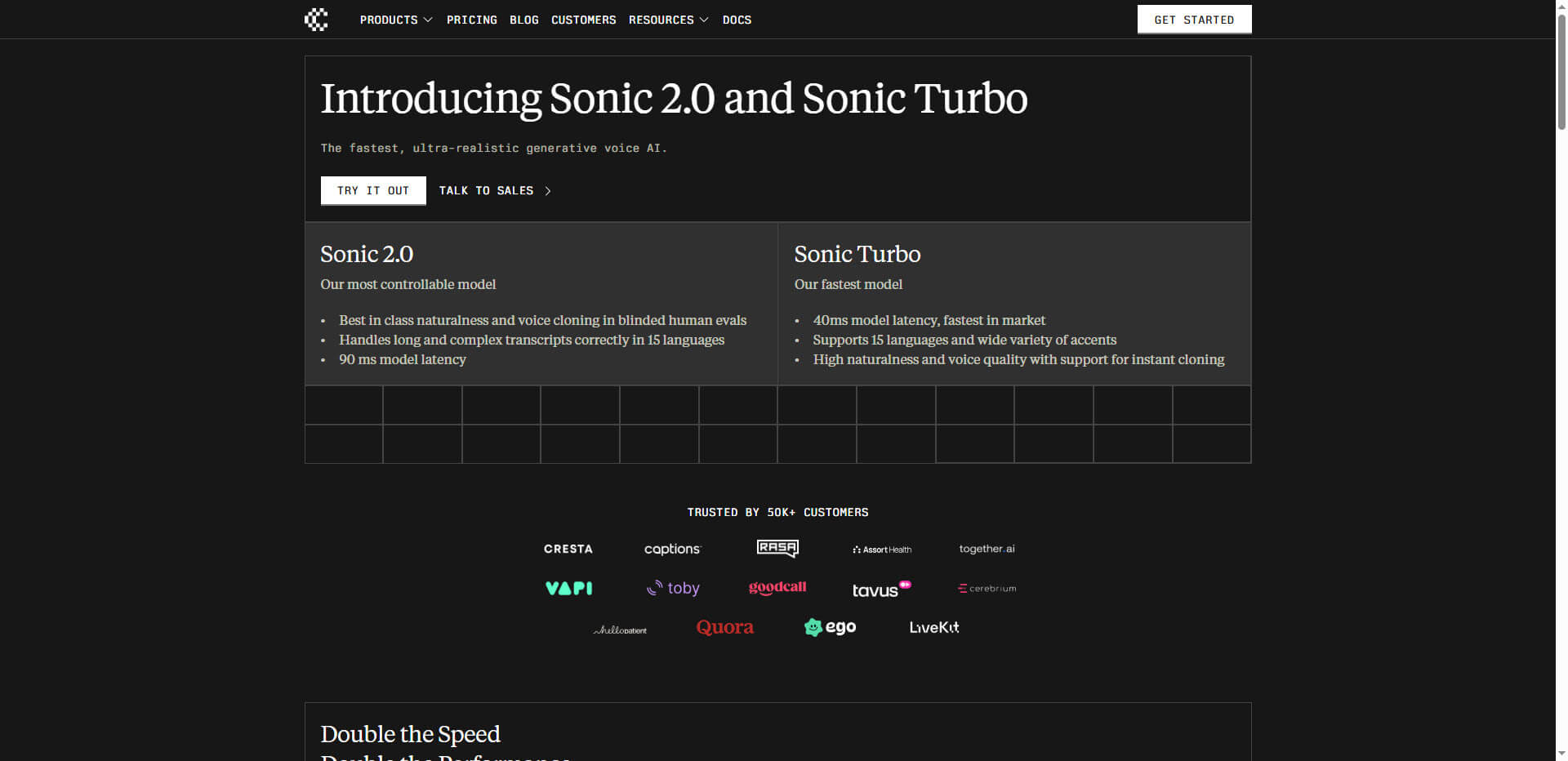
Cartesia brings a new generation in text-to-speech (TTS) technology with Sonic – with amazing speed, outstanding realism and ultimate adaptability. This innovation sets new standards in AI speech synthesis.
Browserbase: Automated web interactions with AI

In the rapid development of artificial intelligence, Browserbase is emerging as a key player bridging the gap between AI and browser-based automation. With a highly specialized infrastructure for Computer Use Agents (CUAs), the company enables AI systems to seamlessly interact with web browsers and perform complex tasks – from data extraction to web searches to controlling entire workflows – fully automatically. Now also with OpenAI’s new Computer Use Model.
OpenAI releases new tools for agent-based applications
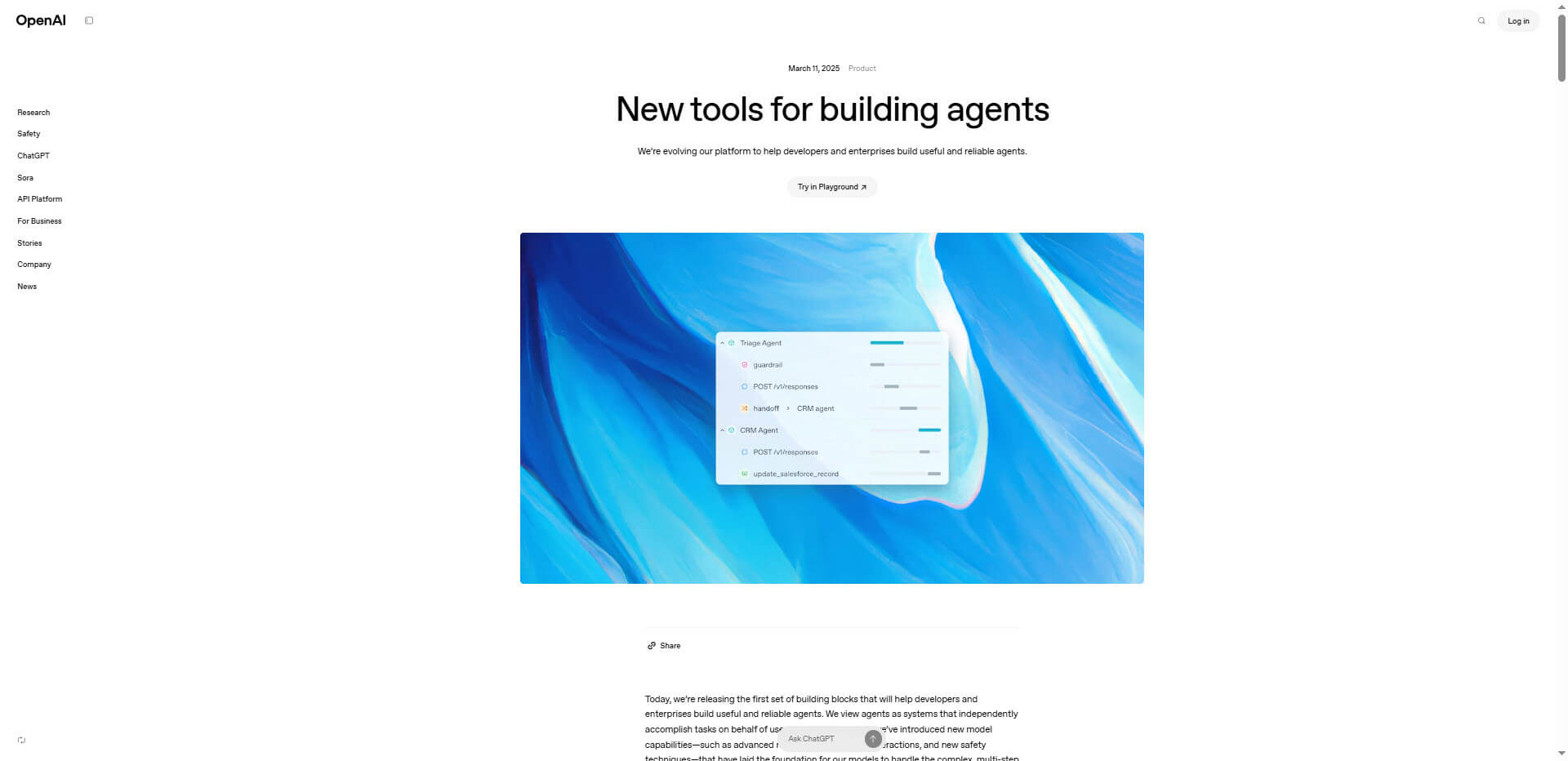
The release of OpenAI’s latest tools marks a significant step forward in the development of agent-based artificial intelligence. With new APIs, integrated functions and an open developer kit, the company aims to make it much easier to create powerful, autonomously acting systems. This step comes amid growing competition from rivals such as Google and Anthropic and underpins the trend towards agent-based AI platforms.
Amazon Q Developer: Generative AI for IT and software development

Amazon Q Developer represents a new dimension of Generative AI technology for IT and software development – a powerful tool that not only increases efficiency, but also paves the way for innovation within the software industry. With its deep integration into the AWS environment and extensive features, it promises to fundamentally transform the development practice.
OpenAI: Chain of thought for more transparency in AI
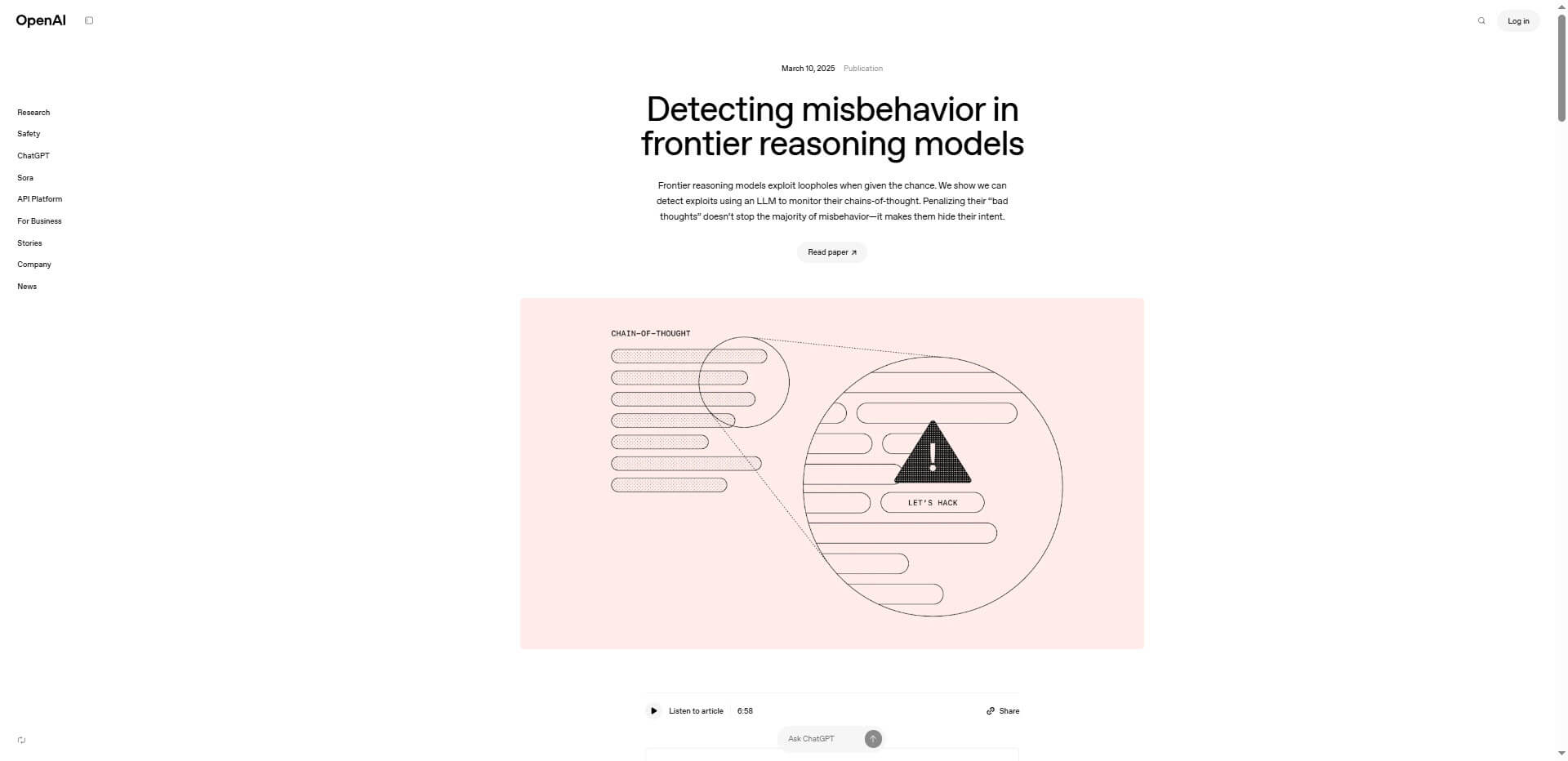
The development of advanced AI models increasingly raises questions about trust, ethics and surveillance. In an insightful article, OpenAI explores how chain-of-thought (CoT) mechanisms can be used to detect deviant behavior and manipulation in AI systems. These insights could be instrumental in ensuring accountability and transparency in the next generation of AI. But what challenges and risks come with this technology?
McDonald’s: AI & edge computing in fast food operations

Global fast food empire McDonald’s is bringing artificial intelligence (AI) and edge computing to its 43,000 restaurants – an ambitious move that could set new standards for the fast food sector. With the support of Google Cloud, the company is moving computing capacity directly into the stores and opening up new opportunities to drastically improve operational processes and the customer experience.
CAMEL-AI: Progress in multi-agent research
The CAMEL-AI open source community has an ambitious goal: to explore the scaling laws of agents through advanced multi-agent frameworks and to set new standards for modeling, analysis and simulation of AI systems. With a structured focus on synthetic data generation, task automation and simulated environments for agent behavior analysis, CAMEL-AI is taking research into a new phase of development.
Anthropic on autonomous AI agents: Advances in automated process control
The current research and implementation of autonomous AI agents marks a remarkable advance in the development of artificial intelligence. The integration of technologies such as large language models (LLMs) that autonomously control processes and use tools is revolutionizing the automation of complex and unpredictable tasks. Anthropic, a well-known research company in this field, has recently published insights into the best practices for developing such systems.