Related to multiple guides. For full context, see our AI Agents Guide & Claude AI Guide.
How AI Rockstars evaluates this update
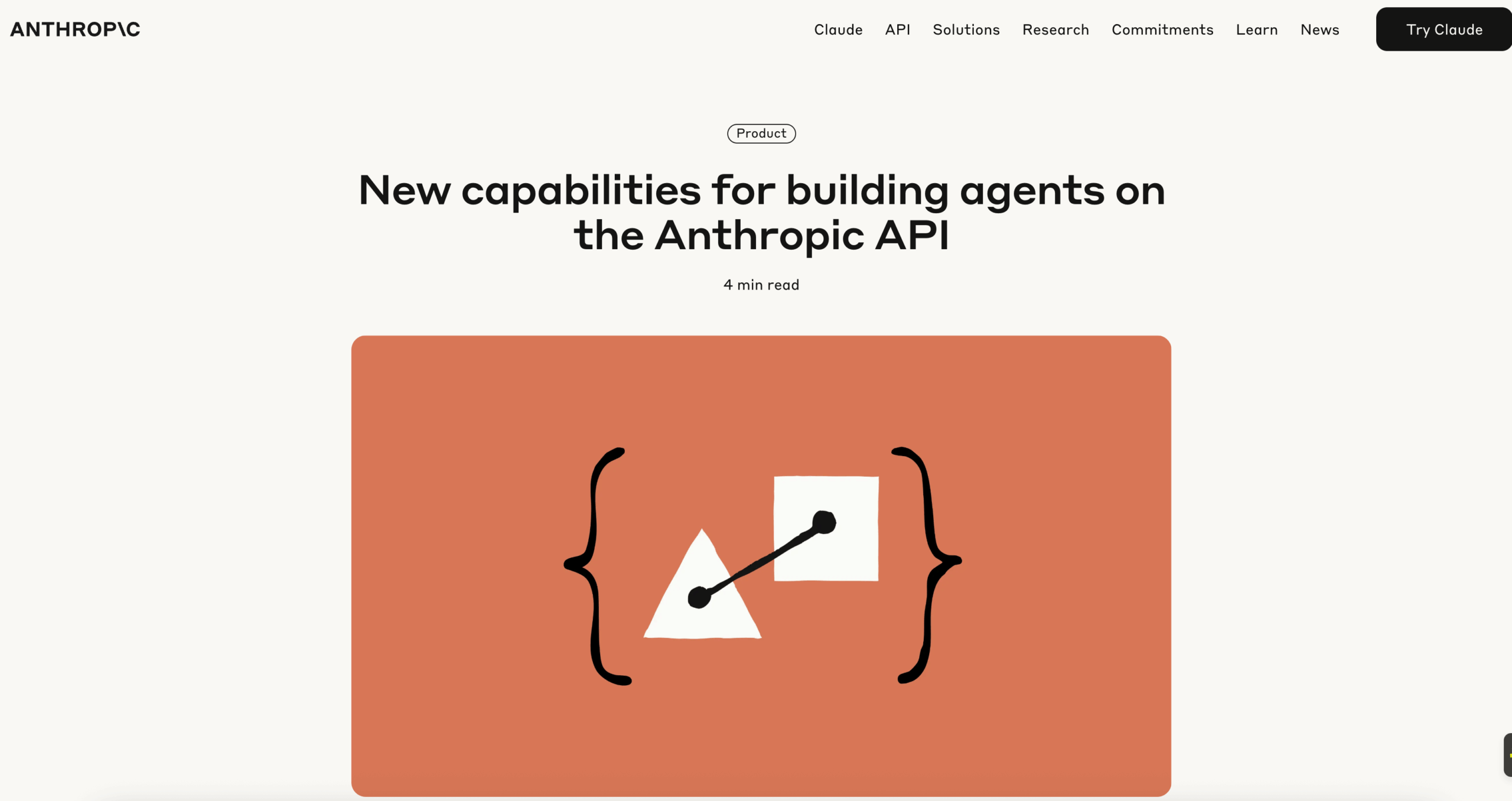
AI Rockstars evaluates Anthropic API: New code execution and MCP connectors transform AI agents by checking official product information, availability, pricing or cost impact, workflow relevance, integration depth, and whether the update changes a practical decision for teams. This article should be read as an AI-news explainer: verify current access, terms, and model behavior before using the tool in production.
What should readers do next?
Use this post to understand the update, then compare it with the broader Claude AI guide and the AI Rockstars planning tools. For business use, check whether the tool improves quality, saves time, reduces cost, or adds integration risk before rolling it into a workflow.
Which official sources should readers compare?
MCP connectors create seamless integration
The MCP connectors standardize tool integration through the Model Context Protocol and provide direct access to over 8,000 applications through partners such as Zapier, Asana and Atlassian. When a project management agent receives a request such as “postpone task X by two weeks due to supplier issues”, Claude connects to Asana’s MCP server, retrieves task dependencies and updates dependent tasks automatically. This architecture reduces integration complexity by 73 percent compared to custom API implementations. Companies like Thomson Reuters are already using these capabilities to process legal documents 60 percent faster by analyzing 500-page M&A documents across confidentiality and payment clauses.Files API enables persistent document management
The Files API introduces document lifecycle management and supports formats such as PDFs (text extraction), CSVs (data analysis) and images (OCR via Claude Vision). A 1 GB file upload is processed in an average of 8.2 seconds, outperforming AWS S3-based approaches by 40 percent. Extended prompt retention maintains context for 60 minutes (12 times longer than the previous 5-minute TTL) and dramatically reduces the cost of complex workflows. For a customer service agent processing a multi-step refund, the total cost with caching is $0.33 versus $0.45 without caching – a savings of 27 percent. The most important facts about the update:-
- Code execution: python sandbox with 4GB RAM limit, automatic termination after 15 minutes of inactivity
- MCP integration: Access to over 8,000 applications through partners such as Zapier, Asana and Atlassian
- Files API: Support for PDFs, CSVs and images with 8.2 second median latency for 1GB uploads
- Extended storage: 60-minute prompt storage with up to 27 percent cost savings
- Security: SOC 2-certified data centers with FIPS 140-2 compliant encryption
- Pricing: 50 free code execution hours daily, $0.05 per hour thereafter
- Performance: 73 percent less integration complexity through standardized MCP architecture
- Use cases: Pharmaceutical research reduces screening time from 14 days to 43 hours
Read also: Claude Sonnet 4.6: The massive coding & agent update
AI Rockstars verdict
TL;DR: Anthropic API code execution and MCP connectors matter because they move AI agents from chat responses toward tool-using workflows. The strategic question is not whether agents can call tools, but whether permissions, logs, and failure handling are production-ready.
Editorial recommendation: Treat these features as infrastructure for agentic workflows. Teams should prototype narrow internal agents first, with explicit tool permissions, sandboxing, and human approval for risky actions.
Production readiness checklist for Anthropic agent features
| Factor | Priority | Why it matters |
|---|---|---|
| Tool permissions | Critical | Agents should only access the systems needed for the task. |
| Code execution sandbox | Critical | Generated code must run in controlled environments. |
| Audit logs | High | Every tool call and data access path should be traceable. |
| Human approval gates | High | Risky actions need review before execution. |
FAQ
Why are MCP connectors important for AI agents?
MCP connectors give agents a standardized way to access tools and data sources, which can make workflows more reliable and easier to govern.
Is code execution safe for AI agents?
It can be safe when sandboxed, permissioned, logged, and limited to clearly defined tasks.
What is the best first use case?
Start with internal, low-risk workflows such as research, code assistance, data preparation, or documentation tasks.